

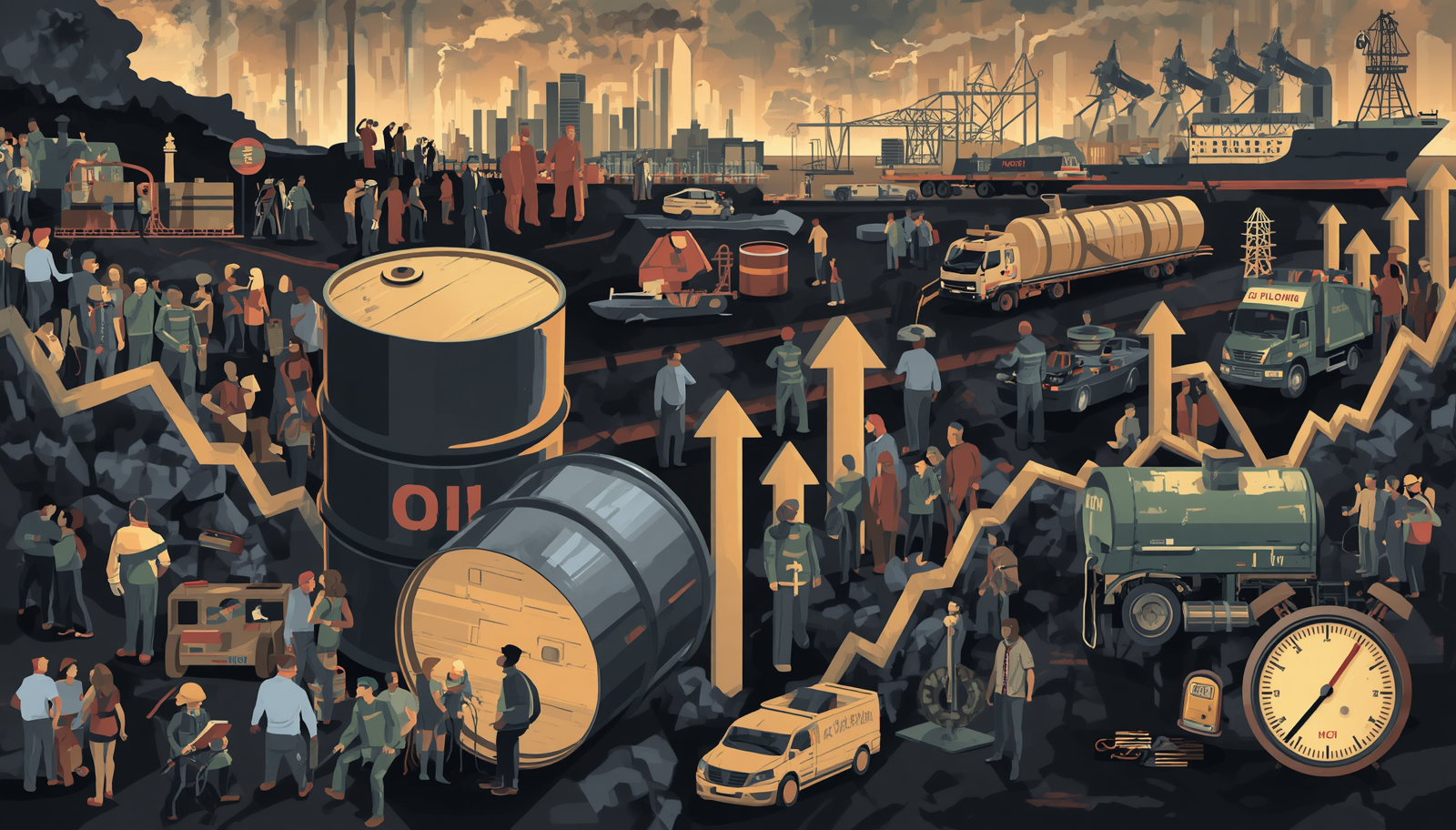
Global manufacturers are watching the evolving oil supply chain volatility surrounding the recent U.S.-Iran agreement with unprecedented interest. As reports indicate that the United States and Iran are moving toward a formal agreement that would reopen critical oil shipping routes and restore market confidence, oil prices have already begun to decline in anticipation of the deal. Brent crude and WTI crude prices have fallen sharply as traders price in the potential return of Iranian oil exports and the reopening of the Strait of Hormuz, one of the world’s most strategically important energy corridors.
For manufacturing leaders, however, the story extends far beyond commodity pricing. The broader issue is energy supply chain resilience. Over the past several years, geopolitical instability, transportation bottlenecks, labor shortages, inflationary pressures, and fluctuating demand have created a labyrinthine environment for manufacturers that depend heavily on oil-derived resources. Consequently, executives must now determine whether the anticipated market stabilization represents a lasting shift or merely a temporary reprieve.
Geopolitical Disruptions Continue to Challenge Energy Supply Networks
The global oil industry has endured a period of extraordinary turbulence. Conflict in the Middle East disrupted shipping routes, constrained exports, and heightened uncertainty throughout the energy ecosystem. As a result, manufacturers faced elevated transportation costs, volatile raw material pricing, and increased operational risk. Even organizations with sophisticated procurement strategies struggled to forecast costs accurately.
Moreover, the potential reopening of the Strait of Hormuz may alleviate some immediate pressures, yet significant challenges remain. Inventory replenishment, infrastructure restoration, shipping normalization, and production ramp-ups require time. Industry analysts continue to caution that structural supply constraints could persist even after a formal agreement is signed. Therefore, manufacturers must resist the temptation to assume that lower oil prices automatically translate into long-term stability.

Falling Oil Prices Create New Opportunities and New Risks
As optimism surrounding the U.S.-Iran agreement grows, oil prices have declined substantially. Markets are responding to expectations that additional supply will return to global markets and that critical transportation corridors will reopen. This reduction in energy costs offers immediate relief for manufacturers that depend on petroleum-based inputs, transportation fleets, plastics production, chemicals, packaging materials, and industrial processing operations.
Nevertheless, lower prices introduce a different set of strategic considerations. Manufacturers often react to declining energy costs by accelerating production plans or increasing inventory positions. Yet if geopolitical negotiations falter or implementation delays emerge, organizations could once again face abrupt price escalation. Consequently, executives must balance optimism with prudence while developing agile supply chain strategies capable of adapting to rapidly changing market conditions.
Supply Chain Resilience Requires More Than Cost Management
Many organizations continue to focus narrowly on procurement savings. While cost reduction remains important, modern manufacturing success increasingly depends on supply chain resilience strategy and enterprise-wide visibility. The most successful organizations are strengthening supplier diversification, enhancing demand forecasting capabilities, and implementing digital monitoring systems that provide real-time insights into market fluctuations.
Furthermore, the interconnected nature of today’s manufacturing environment means that disruptions rarely remain isolated. A change in oil pricing can influence transportation expenses, production costs, consumer demand, inventory management, and capital investment decisions simultaneously. Therefore, organizations require integrated planning approaches that connect operational execution with strategic decision-making. This holistic perspective enables leaders to respond swiftly when market conditions shift unexpectedly.
Project Management Creates Stability During Market Uncertainty
Periods of market volatility often expose weaknesses in organizational planning and execution. This is where disciplined project management becomes indispensable. Effective project management frameworks help manufacturers evaluate risk, prioritize investments, coordinate cross-functional initiatives, and maintain operational continuity despite external disruptions.
Additionally, project leaders play a critical role in aligning procurement, operations, logistics, finance, and executive stakeholders around a common strategy. Whether implementing supply chain transformation programs, deploying new technology platforms, restructuring sourcing models, or managing capital projects, strong project governance ensures organizations remain focused on measurable business outcomes. In an environment characterized by uncertainty, structured execution becomes a significant competitive advantage.
Business Consulting Helps Manufacturers Navigate Complexity
Today’s manufacturing leaders face a multifaceted challenge. They must manage immediate operational demands while simultaneously preparing for future market shifts. Business consulting services provide the analytical rigor, strategic insight, and transformation expertise required to navigate this complexity effectively.
Through comprehensive assessments, scenario planning, risk management strategies, operational optimization initiatives, and portfolio governance frameworks, consultants help organizations build sustainable competitive advantages. More importantly, they help leadership teams transform uncertainty into opportunity by creating adaptable operating models capable of thriving under diverse market conditions.
Turning Market Shifts Into Strategic Advantage
At Blackbeez Consulting, we understand that manufacturing organizations operate in an increasingly interconnected and volatile world. Energy market fluctuations, supply chain disruptions, and geopolitical uncertainty require more than reactive decision-making. They demand strategic foresight, disciplined project execution, and resilient operational frameworks.
Our consulting and project management professionals help manufacturers strengthen supply chain resilience, optimize enterprise portfolios, improve operational performance, and deliver transformation initiatives that generate measurable results. As oil markets continue to evolve and global supply networks adapt to changing geopolitical realities, organizations that embrace proactive planning will be best positioned to convert disruption into sustainable growth.
The manufacturers that emerge strongest from this period will not simply react to market conditions—they will architect the future of their operations with precision, agility, and confidence.
